Showing posts with label philosophy. Show all posts

Thursday, September 10, 2020

Personal Identity

Here are some cases to help us begin thinking about the topic of personal identity, which is how we retain our identity or remain the same individual over time, despite the many physical and mental changes that happen to us. We tend to think that we do retain that identity and that, for example, you were once 5 years old: that 5 year old was you. (That assumption can be challenged, however). These cases below can be helpful in beginning to think about these issues.

Note: one concern here is whether these cases are possible but in the sense of logically possible or metaphysically possible or even physically possible. We aren't concerned about whether these cases are realistic or are likely to happen, just that they are possible in some of these senses. 

[This page is discussed on the "I think, therefore I fan" podcast]

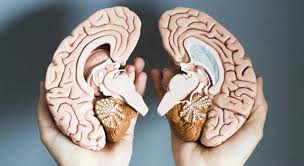
1. Brain swap: your brain, originally in "body 1" is put into another body, "body 2," which then "wakes up" and all is fine. Where are you?

2. Mind swap: your mind (what's that?), originally in Body 1, is now in Body 2. (And the mind in Body 1 is now in body 2). which then "wakes up" and all is fine. Where are you? 

Particular versions of this case: 

2.1. John Locke's "prince and the cobbler." The prince did something really bad, deserving of punishment. He "wakes up" - with his memories and knowledge - in the cobbler's body (and the cobbler wakes up in the prince's body, happy to now get to live the life of a prince). Which body should be punished?

2.2. Films like "Freaky Friday" (also, there are many films and shows about personal identity, e.g., Star Trek .. what else?):


3. Partial brain swap: your cerebrum (or "higher brain," responsible for consciousness, awareness, thoughts, perceptions, etc.) is transplanted to another body (and then you "wake up" fine and go about your life), but your brain stem remains in that body, and so that body continues to breath, the heart keeps pumping blood, and so that body remains biologically alive. Where are you? 

4. Brain or mind swaps with a race and/or sex twist
  • your brain, originally in "body 1" is put into another body, "body 2," and body 2 is of a different race or sex than body 1. Where are you? (If you think this isn't possible, then you would seem to think that your race or sex is essential to who you are, so if that changes, you wouldn't exist anymore. However, things might be more complicated because perhaps there's a way that your brain or mind can be racialized or sexed [or gendered] in ways that you could retain that even on this type of body swap). 
  • your mind, originally in "body 1" is put into another body, "body 2," and body 2 is of a different race or sex than body 1. Where are you? (If you think this isn't possible, then you would seem to think that your race or sex is essential to who you are, so if that changes, you wouldn't exist anymore. However, things might be more complicated because perhaps there's a way that your brain or mind can be racialized or sexed [or gendered] in ways that you could retain that even on this type of body swap). 
  • Disney's / Pixar's "Out" even has a human-dog mind swap!
5. Death: you are hit by a bus and killed. Assume there is no afterlife, heaven or hell. Where are you?

6. Permanent coma: You are hit by a bus and your brain (or higher brain) totally destroyed, and so there is no consciousness or potential for consciousness, but your body keeps breathing for 50+ years and then it dies. Assume there is no afterlife, heaven or hell. Where are you? When did you end?

6.5. When do you begin? When your body begins (or the body you will "inhabit" begins)? Or when your mind begins? When is that? (What are you? Are you your biology, or your biography [or both, or neither!]?)

7. "Day person" and "night person" or Dr. Jekyll and Mr. Hyde-like case (with the story modified a bit): there's one body, and during the day we might say that kind Dr. Jekyll is "in" that body, whereas at night evil "Mr. Hyde" is "in" that body, and they don't know about each other at all. How many people are "in" in that body? If Mr. Hyde does something bad, should Dr. Jekyll be blamed for it?


8. Brain split: your brain is removed and split in two. Assume it will still function just as well (!!!) and the two halves of the brain are put in new bodies (or one old body and one new body). Where are you? What has happened here?


9. Teletransporter: on Earth, the transporter machine scans your body for all its physical information, destroys that body, beams that information to Mars, the machine rebuilds an exact physical duplicate of that body, and that body is conscious with all the memories and knowledge that you had. That body gets out of the transporter, remembering what had been happening on Earth moments ago and goes about their business. Where are you?


10. Teletransporter variants
  1. the transporter machine on Earth scans your body for all its physical information, does not destroy that body, beams that information to Mars, the machine rebuilds an exact physical duplicate of that body, and that body is conscious with all the memories and knowledge that you had. That body gets out of the transporter, remembering what had been happening on Earth moments ago and goes about their business. Also, that body on Earth steps out of the transporter, unharmed. Where are you? What's happened here?
  2. the transporter machine on Earth scans your body for all its physical information, destroys your body, beams that information to Mars, the moon and Jupiter, the machine rebuilds exact physical duplicates of that body, and that body is conscious with all the memories and knowledge that you had. Those bodies get out of the transporter, remembering what had been happening on Earth moments ago and goes about their businessAlso, that body on Earth steps out of the transporter, unharmed. Where are you? What's happened here? ("The Prestige" is a film that has a scenario like this). 
  3. the transporter machine on Earth scans your body for all its physical information, does not destroy that body, beams that information to Mars, the moon and Jupiter, the machine rebuilds exact physical duplicates of that body, and that body is conscious with all the memories and knowledge that you had. Those bodies gets out of the transporter, remembering what had been happening on Earth moments ago and goes about their businessAlso, that body on Earth steps out of the transporter, unharmed. Where are you? What's happened here?
In these splitting cases, it seems like the (separate) individuals involved have a shared, overlapping past: at least that's how they experience it. What does that mean for personal identity?


Discussion questions:

1. Sometimes people do bad things and then they later (perhaps after going to prison) declare that they are a "new person," and sometimes they seem to mean that literally. Given your understanding of the topic of personal identity, do you think this could be true, that this individual is a literal new person, which suggests they aren't the same person who did that bad thing? Explain and discuss.

2. Could *you* have had different parents? Given your understanding of the topic of personal identity, explain why this is a complex issue, and explain and defend your answer. 

3. You are a person, right? What makes you a person? Why are you a person? (We know you are human or a human being, but why are humans or human beings persons?). Explain and defend your answer in light of the readings and discussions.

4. If people can make it to heaven or hell, how could that be? Given your understanding of personal identity, explain what position on that issue would be best to take in order to think that we can continue to exist after death. Defend your perspective.

5. What are you, in your essence? What, if you lost it, would you literally cease to exist? What makes you *you*? Explain and defend your views. 


Monday, December 31, 2018

“What norms or values define excellent philosophy of religion?”

“What norms or values define excellent philosophy of religion?”


Here as a Google Doc.

“Excellent philosophy of religion” is, unsurprisingly, excellent philosophy, about religion.

But what’s excellent philosophy and what are the norms and values associated with it? And what are the philosophical aspects of religion, whatever religions are?

To begin answering these questions, I suggest that philosophy of religion that emphasizes at least these features tends to be more excellent: (1)  experiential, (2) integrated, (3) truthful and fair, and (4) done from a sense of wonder.

Thursday, May 24, 2018

Introduction to Ethics

Here I briefly sum up my basic goals and strategy in my Introduction to Philosophical Ethics course. 

My approach is: 
  • interactive and discussion-based,
  • skills-of-reasoning-focused, with the hope that students retain these basic skills and attitudes and apply them to future ethical questions, 
  • built on a foundation of "data" -- concerning the reasons given about various issues -- gathered from everyday observations, asking people questions (informal surveys) and, potentially, internet research, and so
  • not readings-based: most readings augment the process; they aren't essential. 
My overall goal is: 
  • to show students that we can systematically reason about moral issues, and teach them how to do that, to develop their skills at doing that. Here's the summary:


See below for the details!


Tuesday, February 27, 2018

Chimpanzee Personhood

I made some small contributions the legal document here arguing that chimpanzees should be considered persons, not things:

"Philosophers Offer Support For Chimpanzee Rights Cases"

Sunday, November 27, 2016

Surveys about Animal Research

Ari Joffe, MD, has done a number of surveys related to animal research and the arguments given for and against it. I need to do more to share this research but here is a start. Abstracts are also below the fold:
1.
2.
Joffe AR, Bara M, Anton N, Nobis N.
BMC Med Ethics. 2016 Mar 29;17:17. doi: 10.1186/s12910-016-0100-x.

PMID:
 
27025215
 
Free PMC Article
3.
Joffe AR, Bara M, Anton N, Nobis N.
BMC Med Ethics. 2015 May 7;16:29. doi: 10.1186/s12910-015-0024-x.

PMID:
 
25947255
 
Free PMC Article
4.
Joffe AR, Bara M, Anton N, Nobis N.
Philos Ethics Humanit Med. 2014 Dec 30;9:20. doi: 10.1186/s13010-014-0020-7.

PMID:
 
25547734
 
Free PMC Article

Sunday, October 16, 2016

On Philosophical Counseling

THE BIG QUESTIONS

Would you ditch your therapist for a “philosophical counselor”?


Instead of going to traditional psychotherapists for advice and support, growing numbers of people are turning to philosophical counselors for particularly wise guidance. These counselors work much like traditional psychotherapists. But instead of offering solutions based solely on their understanding of mental health or psychology, philosophical counselors offer solutions and guidance drawn from the writings of great thinkers.

Thursday, September 29, 2016

Tweet, Tweet!

Tuesday, August 16, 2016

#PublicPhilosophy


I'm now an Associate Editor at 1000 Word Philosophy!

The page is currently being redone, but once it's done, I may be asking YOU to write some very concise and tightly argued essays for it!

Friday, July 22, 2016

On "Moral Status"


What is the moral status of animals? What’s the moral status of fetuses? What’s the moral status of the permanently comatose? While questions like these are sometimes asked (also about ‘moral standing’), I have written a few paragraphs where I argue that the term “moral status” shouldn’t be used.

A Review of "Philosophy Comes to Dinner"

Philosophy Comes to Dinner: Arguments About the Ethics of Eating, Andrew Chignell, Terence Cuneo, and Matthew C. Halteman (eds.), Routledge, 2016, 299pp., $33.95 (pbk), ISBN 9780415806831.

Reviewed by Tina Rulli, University of California, Davis

This book contains my and Dan Hooley's "A Moral Argument for Veganism."

Thanks, Tina!

Monday, July 18, 2016

On the "What's Wrong?" Blog: Abortion and Animal Rights - Animal Rights and Abortion

What’s Wrong With Linking Abortion and Animal Rights?

Nathan Nobis, an Associate Professor of Philosophy at Morehouse College, kindly contributed the following piece to What’s Wrong?  Professor Nobis is the author of many articles and book chapters on topics concerning ethics and animals (e.g., vegetarianism, experimentation) and the ethics of abortion, an unpublished 2003 essay on the relations between these topics, and a review of a recent book on these topics’ intersections, which inspired this essay.  What’s Wrong? is grateful to Professor Nobis for permission to publish this original piece here.

Summary:
Should your views on abortion influence your views on animal rights? Should your views on the moral status of animals influence your views on the moral status of human fetuses?
Generally, no. Most arguments against abortion have no implications for animal rights and those that might seem to be poor arguments against abortion. And arguments for animal rights only have implications for rare, later abortions of conscious fetuses, not the majority of abortions that affect early, pre-conscious fetuses.
On the other sides, though, a common of objection to animal rights does support a pro-life view and an influential feminist pro-choice argument does suggest positive implications for animals, though.
Overall, the topic of abortion presents with an inherent complexity never analogously present in animal rights issues – the perspective of the pregnant woman whose life and body the fetus depends on – and so the issues are importantly distinct. 

Sunday, July 17, 2016

Questions, Answers and Evidence

I just saw that Moore's Principia Ethica is online. It has a great beginning, relevant to all writers and researchers, in many fields:
"It appears to me that in Ethics, as in all other philosophical studies, the difficulties and disagreements, of which its history is full, are mainly due to a very simple cause: namely to the attempt to answer questions, without first discovering precisely what question it is which you desire to answer."

Figuring out what exact question(s) about a topic one is trying to answer determines how one will answer those questions and what types of evidence is needed to answer those questions

Thanks, G.E.!


Monday, June 27, 2016

Book Review: Beating Hearts: Abortion and Animal Rights

SHERRY F. COLB AND MICHAEL C. DORF

Beating Hearts: Abortion and Animal Rights

Sherry F. Colb and Michael C. Dorf, Beating Hearts: Abortion and Animal Rights, Columbia University Press, 2016, 252pp., $35.00 (hbk), ISBN 9780231175142.

Reviewed byNathan Nobis, Morehouse College


Wednesday, June 22, 2016

Saturday, April 30, 2016

Powerpoint on Animal Experimentation

I was recently asked to make an audio-narrated PowerPoint that reviews this article of mine, to be used in a UCSD course on non-animal-based medical research:

 2011 Oct;342(4):297-304. doi: 10.1097/MAJ.0b013e3182299421.

The harmful, nontherapeutic use of animals in research is morally wrong.

Abstract

It is argued that using animals in research is morally wrong when the research is nontherapeutic and harmful to the animals. This article discusses methods of moral reasoning and discusses how arguments on this and other bioethical issues might be defended and critiqued. A basic method of moral argument analysis is presented and used to show that common objections to the view that "animal research is morally wrong" fail: ie, common arguments for the view that "animal research is morally permissible" are demonstrably unsound or in need of defense. It is argued that the best explanations why harmful, nontherapeutic research on human beings is wrong, ie, what it is about humans that makes such experimentation wrong, apply to many animals as well. Thus, harmful and nontherapeutic animal experimentation is wrong for reasons similar to the reasons that harmful and nontherapeutic human experimentation is wrong.

PMID: 
21952174

DOI: 
10.1097/MAJ.0b013e3182299421

This PowerPoint with audio narration is available for download here


Information on this course is below the fold. 


Tuesday, April 26, 2016

One of my favorite books for teaching ..


By Peg Tittle
Published by Pearson Higher Education
Published Date: May 5, 2004

Description

What If. . . Collected Thought Experiments in Philosophy is a brief, inexpensive collection of over 100 classic and contemporary “thought experiments”, each with an accompanying commentary, that explore philosophical arguments and often address a genuine problem in life. The value of the book is in its simplicity in both format and tone: Each thought experiment is accompanied by commentary that explains importance of the experiment, and questions to provoke thought and discussion, all encapsulated within two pages. The book is direct, clear and conversational but does not dilute difficult ideas.